


· Ben Wilson · GeneSprout Stories
One in 130 in the World: Our Family's Bloom Syndrome Story
Ben Wilson's fatherly intuition led to his son's ultra-rare diagnosis. After a year of being told nothing was wrong, whole exome sequencing gave the Wilsons an answer—and a way to get ahead of what comes next.
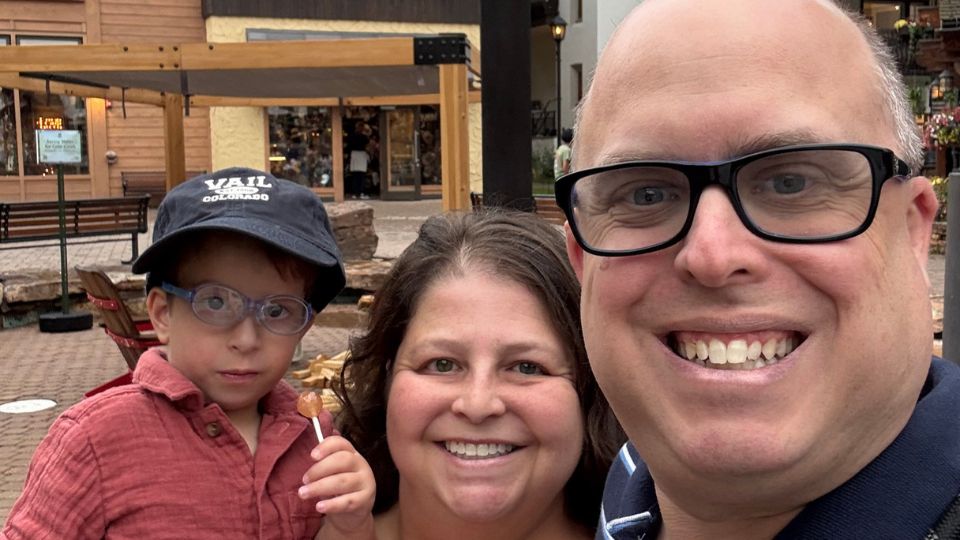
Gabe was born in December 2023, and when you have a child you never expect them to be diagnosed with an ultra-rare genetic disorder. Throughout the pregnancy we knew he was measuring small, and the doctors referred to him as IUGR (Intrauterine Growth Restriction). They decided they wanted to deliver him at 36 weeks and 6 days. Gabe was born weighing 3 pounds 9 ounces, which was smaller than I thought he would be, and I was concerned. We were assured he would thrive outside the womb.
Something wasn’t adding up
Over the first several months of life, my fatherly intuition told me something was just not adding up. He continued with slow weight gain and only weighed about 9 pounds at one year old. He missed milestones—sitting up, crawling, walking—and had speech delay and physical limitations. His physician’s assistant at Children’s Hospital Colorado kept telling us he did not have a genetic condition. Due to his severe feeding issues, including vomiting, we were referred to a nutritionist, and she was the one who said she thought he had a genetic condition.
Getting to testing
We had the unfortunate situation of delivering a stillborn child, so I used my resources to contact Rocky Mountain Children’s Hospital for genetic testing. The wait at Children’s Hospital for their genetics department was one year. Rocky Mountain Children’s Hospital was able to get us in within 4 months of contact, because they had a cancellation.
The geneticist we saw immediately recognized the facial features Gabe had, along with the developmental delays. The initial thought was Russell-Silver syndrome, a form of dwarfism. After the first round of testing came back negative for Russell-Silver, the geneticist wanted to do Whole Exome Sequencing. This turned into an insurance difficulty—they didn’t think it was necessary—but we got it approved. WES testing discovered that Gabe has Bloom syndrome, an ultra-rare genetic condition with approximately only 130 cases known worldwide.
What Bloom syndrome is
Bloom syndrome is a DNA repair disorder that causes repeated DNA damage, which predisposes these children to various types of cancer. It also presents with short stature, feeding difficulties, and sensitive skin, including a butterfly rash across the nose.
Why knowing changed everything
Since Gabe’s diagnosis, I’ve had the chance to speak on a patient panel at the World Orphan Drug Congress (WODC), where I shared what our family’s journey has taught me. One of the things I talk about most is how much better it is to actually know. Having a diagnosis lets us adjust his care and management proactively, instead of reacting after something goes wrong. That knowledge has changed how we think about and plan for his future.
It’s also why I believe so strongly that every child should be tested early, before symptoms even show up. The sooner we know, the sooner we can start protecting these kids.
Today, I’m honored to serve as secretary of the board for the Bloom Syndrome Association. I’m also currently serving as the lead Global Ambassador, helping connect other families around the world who are navigating this same ultra-rare diagnosis. Gabe’s story is far from over, but sharing it—and helping other parents find answers faster than we did—has become part of how our family moves forward.
This article reflects the personal experience of the author. It is not intended as medical advice. If you have concerns about your child’s health, please speak with your pediatrician.