
· Yojana Rodriguez-Humbert, EdD · GeneSprout Stories
What Our Family Needed Next
After Yojana's experience with her daughter, Kaya, who battled sphingosine phosphate lyase insufficiency syndrome (SPLIS), Yojana founded Kaya Girl Legacy and dedicated herself to advocating for universal access to genetic screening. In this compelling piece, she wonders how genetics could be part of everyday life and a part of how we understand ourselves.
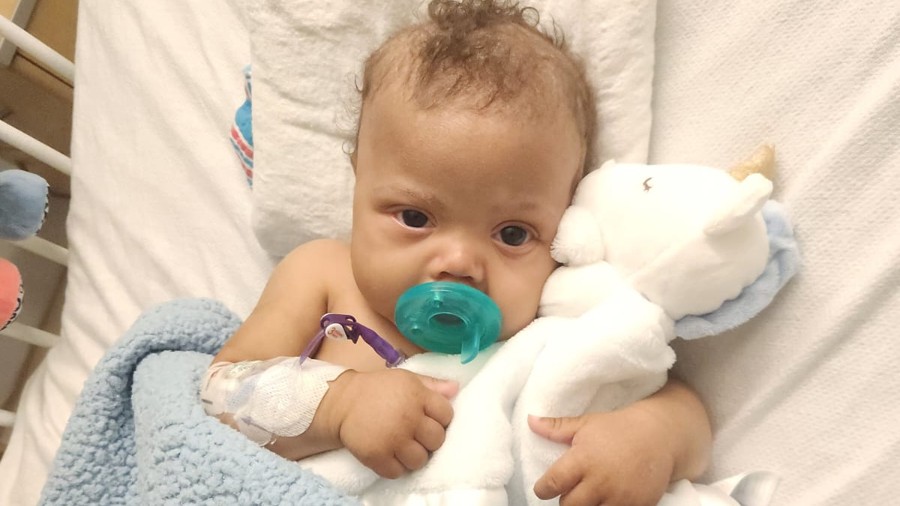
You receive a positive newborn screening result.
Something is wrong.
More blood is drawn. Genetic testing is ordered.
And then you wait.
You wait while knowing just enough to understand that something is wrong with your daughter, but not enough to know what you are supposed to do about it.
In those early days with our daughter Kaya, we knew one thing: her immune system was compromised and needed support. She received IVIG therapy, and I did what I knew how to do as her Mami.
I protected her.
I kept her separated from her siblings. I slept on the floor beside her wearing a mask, trying to give my daughter a fighting chance while my mind did everything except rest.
What was happening to my baby?
Where did this come from?
How had no one seen it?
I replayed my pregnancy. Every appointment. Every test. Every precaution. I had even undergone carrier screening before we began building our family.
Then I would look at Kaya.
She was beautiful. She looked healthy. Yet I knew something was happening inside her that I could not see.
There were moments when fear became almost irrational: If I walk away, will she still be here when I come back?
That is a strange place to exist as a parent, knowing something is wrong with your child while having no idea yet what “wrong” means.
So you sit.
And you wait.
What I Didn’t Know Yet
Eventually, genetic testing gave what we had been desperately waiting for a name: Sphingosine Phosphate Lyase Insufficiency Syndrome (SPLIS), caused by variants in SGPL1.
But there was something else I didn’t understand then.
The genetic knowledge available when my husband and I began building our family was not the same knowledge available nearly a decade later when we decided to have another child.
Science had changed. Testing had changed.
Yet no one had ever stopped and said:
It’s been almost ten years since your carrier screening. Genetics has evolved. Before you try again, let’s look at what is available today.
Would that have changed our story? I cannot know.
But I wish we had been given the opportunity to have the conversation.
Because genetics is not one-and-done.
Science moves. Testing expands. Gene-disease relationships are discovered. Variants are reclassified. Families grow.
We needed someone thinking not only about the children already sitting at our table, but about the legacy that might come behind them.
An Answer Wasn’t Enough
Kaya’s early diagnosis mattered enormously. Her genetic results anchored decisions about medications, specialists, and hospital care. We were spared what could have become a long diagnostic odyssey.
But being spared a diagnostic odyssey does not necessarily mean a family has been given a pathway.
We didn’t simply need a test.
We didn’t simply need a result.
We needed a pathway.
A pathway that was not lined with crisis.
A pathway where a mother wasn’t left searching journal articles at night, trying to translate unfamiliar medical language, repeatedly arriving at the same terrifying possibility: this disease may take my child.
A pathway where no one necessarily needed to walk us to every appointment, but someone made sure those appointments existed, and that the specialists caring for one extraordinarily complex little girl were connected.
A pathway where we didn’t have to wait for another organ system to become involved before discovering another specialist should have already been at the table.
A pathway where the urgency of the unknown was met with the urgency of a medical community prepared to receive it.
Knowledge Creates Stewardship
I have described genetic awareness before as stewardship.
Once we hold life-changing knowledge about how our genes can affect our health or our children’s health, we have a responsibility to care for that knowledge and use it wisely.
Kaya’s journey taught me that this responsibility cannot belong only to the family receiving the result.
If science gives us the ability to identify something earlier, our systems must be prepared to do something meaningful with that knowledge.
That doesn’t mean medicine will always have a treatment or that every outcome can be changed. With an ultra-rare condition like SPLIS, sometimes science simply has not caught up yet.
But we can coordinate care before crisis. Connect specialists. Anticipate what can reasonably be anticipated. Explain what is known and what remains unknown.
Parents should not have to build their child’s medical roadmap while simultaneously trying to survive the possibility of losing them.
Knowledge without a pathway can leave a family with an answer, and still completely lost.
What If Genetics Became Part of the Mundane?
But what if there is another pathway…one that begins long before crisis?
What if genetics became part of the mundane?
What if we discussed genetics during wellness visits, before pregnancy, throughout family planning, and again as our children grew?
What if we revisited genetic information not because something had gone wrong, but because science had changed?
We teach children that genes influence things they can see, height, their eye color, hair texture, skin complexion, the features that make them look like us.
What if, as they grew, we also empowered them to understand that their genetic makeup may contain information that could someday help them make decisions about their health and the families they may choose to build?
We have spent decades expanding our understanding of the human genome.
What if we treated that knowledge as a resource and a tool rather than something we primarily reach for at the bedside when something frightening has already happened?
Genetics is complex. Testing cannot predict every illness, and information requires thoughtful interpretation and appropriate counseling.
But perhaps genetics can become a more routine part of how we understand ourselves.
A conversation we revisit.
A family history we update.
A tool we know exists before we desperately need it.
For the Generation Yet to Come
None of the advocacy we do through Kaya Girl Legacy can change the outcome for my daughter.
I know that.
I cannot go backward and give Kaya the science that did not yet exist, the treatment medicine did not yet have, or more time than we were given with her.
But I have come to understand legacy differently.
There is a passage in Psalm 102 that speaks of writing something down for “a generation yet to be created.” I return to that idea often.
Perhaps legacy isn’t only about what we leave behind for the people who knew us.
Perhaps it is also about what we make possible for people who haven’t arrived yet.
A child who hasn’t been born.
A parent who hasn’t received the phone call.
A family who doesn’t yet know the name of the gene that will someday become part of their story.
Kaya Girl Legacy cannot change Kaya’s story. But perhaps what we learned because she lived can help change theirs.
So as we expand access to genetic testing, newborn screening, and genomic medicine, I hope we continue asking:
Are we building the pathway at the same time we’re building access to the answer?
And perhaps even earlier:
Are we giving families opportunities to understand genetics before they ever need an answer?
Maybe the future begins by making genetics a little less extraordinary, less something we encounter only in crisis and more something we understand as part of ourselves.
Because the question shouldn’t only be:
“What did the test find?”
We should also be prepared to answer:
“Now that we know, what do we do next?”
Learn more from Yojana at Kaya Girl Legacy.
This article is for informational purposes only and is not a substitute for professional medical advice. If you have concerns about your child’s health, speak with your pediatrician.